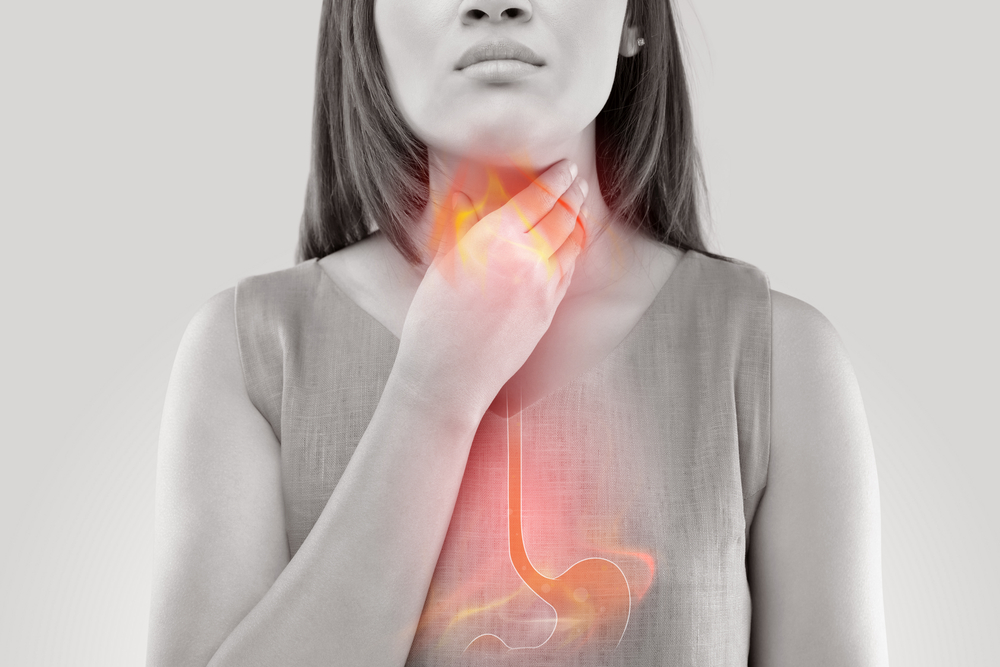
Regurgitation

Regurgitation occurs in approximately 80% of GERD patients with varying degrees of severity. This is often described as a sense of fluid moving up and down in the chest or a sour taste in the mouth.
For infants, regurgitation is usual during their first years of life. As for adults, involuntary regurgitation is a common symptom of GERD and acid reflux. It can also be a symptom called rumination disorder, a rare condition for most people.
Dysphagia (Difficulty Swallowing)

You may have Dysphagia if you have difficulties with swallowing which can be uncomfortable and result in other health problems. Scientists have estimated 18% of people have GERD with unusual Dysphagia, while 31% have usual Dysphagia. A 2020 study suggests that at least 48% of people will experience Dysphagia if they
have GERD symptoms.
But scientists remain uncertain regarding the exact nature of the relationship between Dysphagia and GERD, as noted by the 2020 study. However, scientists have several theories on how this process might work. Their theories include: (1) Upper esophageal sphincter (UES) dysfunction; (2) Hypersensitivity to stomach acid; (3) Esophageal dysmotility; and (4) Esophageal narrowing or stricture.