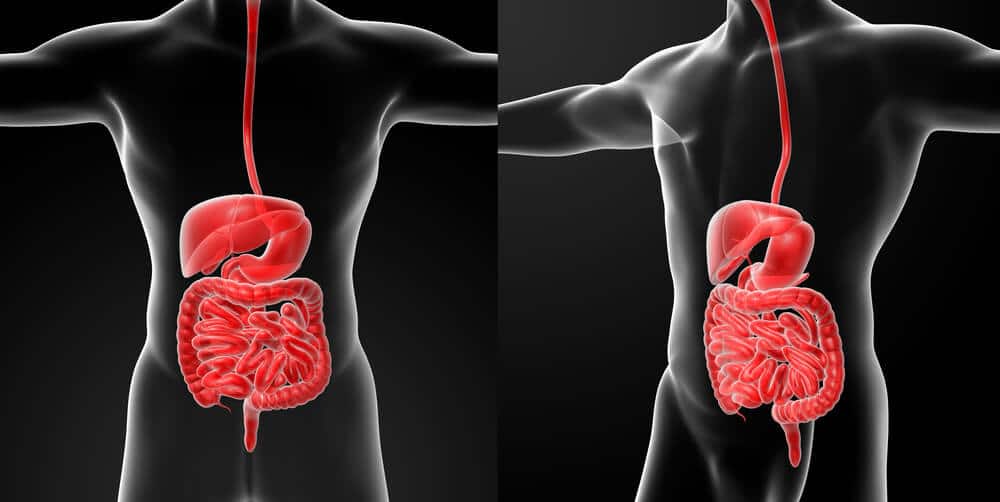
1. Diarrhea

Unfortunately, diarrhea is one of the most common symptoms of Crohn’s disease.
How does Crohn’s cause diarrhea?
Acute (short-term) diarrhea is a result of chronic (long-term) inflammation. Specifically, this IBD can inflame the region where the colon begins and the small intestine ends, which can result in sudden and severe diarrhea.
What is diarrhea caused by Crohn’s like?
This type of diarrhea typically comes on without warning and substantially interferes with a person’s daily activities.
What are the dangers of diarrhea?
Diarrhea isn’t just annoying; in some cases, it can be dangerous! Why? Because it can lead to dehydration, which is an incredibly serious medical condition.
Signs of dehydration include:
- Dizziness
- Dry skin
- Dry mouth
- Swollen tongue
- Extreme thirst
- Fatigue
- Not urinating as much as usual
- Headache
However, diarrhea isn’t the only symptom of Crohn’s disease that can lead to dangerous complications like dehydration…
2. Fever

How does this condition cause fever?
There are two primary ways this condition causes fever: inflammation and medication.
Inflammation
Low-grade inflammation is generally associated with Crohn’s disease. This inflammation may result in abscesses. Unfortunately, abscesses are prime spots for infection, which can result in a fever.
Medication
Another contributing factor to fever? Prescription medication. Specifically, although Crohn’s is not thought to be an autoimmune disease, it does appear to be somehow related to the immune system. Therefore, some doctors prescribe immune-suppressing drugs to Crohn’s patients.
While these medications may ease other side effects of this IBD, it can also mean that someone is at great risk of infection. Once again, infections almost always result in fever.
When is a fever serious?
For adults, a fever over 103° F (or 39.4° C) is considered high-grade and should be taken seriously. However, even low-grade fevers warrant a doctor’s visit if it persists.
When these first two symptoms of Crohn’s develop, the following condition may also set in…
3. Fatigue

About 75%—or 3 out of 4—people with this condition report feelings of fatigue.
Why does Crohn’s disease cause fatigue?
Fatigue is a result of inflammation and illness, both of which can occur with this condition. Specifically, both of these events are taxing on the body, which can result in greater expenditure of the body’s resources, such as energy. As a result of this expenditure, someone can feel completely exhausted, even if they slept all night long.
However, someone people have the opposite problem. Other symptoms of Crohn’s disease may make it impossible for someone to sleep at all. Or, if they do sleep, they may experience frequent disruptions (such as getting up to use the bathroom, thanks to diarrhea). Either way, both of these issues can lead to fatigue.
The following symptom of Crohn’s disease is hard to miss…
4. Abdominal Pain and Cramping

People with Crohn’s disease often experience abdominal pain that’s paired with cramping.
When does this pain occur?
While often worse during a flare-up, this pain can occur at any time. Typically, people experience pain about an hour or two after eating.
Why do these symptoms occur?
There are many ways Crohn’s disease can cause pain and/or cramping, including:
- Inflammation and swelling. Inflammation and swelling are common culprits for this symptom of Crohn’s disease.
- Diarrhea and constipation. Constipation is less likely than diarrhea to occur, although it’s still possible for Crohn’s disease to cause constipation. Both diarrhea and constipation can result in anal fissures, or tears, which may be painful.
If fissures happen, the following alarming symptom is also likely…
5. Blood in Stool

Crohn’s disease isn’t the only condition that can cause bloody stool. That being said, whatever the cause, bloody stool is always a condition that needs to be taken seriously.
How does Crohn’s disease cause bloody stool?
Crohn’s disease causes bloody stool in two primary ways: through fissures and ulcers.
Fissures
Anal fissures are tears on or in the anus. Tears may be a direct result of passing rough stool (from constipation) or passing frequent stool (from diarrhea), which can irritate the anus and result in cracking and bleeding. Sometimes, inflammation itself can make the anus so sensitive that it tears and bleeds from regular use.
Ulcers
Inflammation and swelling of the digestive tract—which can happen with Crohn’s—occasionally result in ulcers, which are open sores. Food may irritate ulcers as they pass through the area; this aggravation may result in bleeding.
Where does the bleeding occur?
Bright red blood typically indicates that there is an ulcer in the lower portion of the intestines. Dark blood typically means the ulcer is higher up in the intestinal tract.
Unfortunately, sores may not just be limited to below the belt…
6. Mouth Sores

Mouth sores are fairly common in Crohn’s disease patients. By some estimates, approximately 20-50% of these people have them. This condition causes a certain kind of mouth sore known as a canker sore.
What are canker sores?
Canker sores are sores that occur in the mouth, often inside the lips or at the base of gums. These sores are typically round and white, oftentimes with a bright red ring encompassing the white circle. These sores are usually painful.
Are canker sores a form of herpes?
Despite popular belief, canker sores are not the same thing as mouth herpes; in fact, the two conditions aren’t related at all, except for location.
Why do canker sores appear?
Mouth sores are caused by a number of different conditions, including vitamin and mineral deficiencies, which may occur as a side effect of Crohn’s disease. Sometimes, these sores may simply be the side effect of medications.
Can’t stomach an upcoming meal?
Those who notice that they are not as hungry as usual or even that their pants fit a little more loosely than normal should keep an eye out for other Crohn’s disease symptoms…
7. Reduced Appetite and Weight Loss

As is the case with most conditions that affect the digestive system, a loss of appetite and resulting weight loss may occur with Crohn’s disease patients.
Why does Crohn’s disease cause these symptoms?
There are countless ways this condition can negatively impact appetite.
- Many patients report simply not feeling hungry or deriving less pleasure from eating.
- Some medications can affect someone’s sense of taste, making eating seem less appealing.
- Nausea and vomiting are also common side effects of many medications.
- Inflammation of the digestive tract may also result in nausea and vomiting.
- If an ulcer is present, eating may cause significant pain, leading someone to avoid eating to avoid triggering this painful response.
- Given the very nature of this disease, sometimes Crohn’s disease patients simply don’t absorb nutrients correctly, which can lead to weight loss.
- Some doctors recommend patients cut out certain foods to avoid flare-ups. However, this behavior may mean reduced caloric intake, resulting in weight loss.
- Hormones fluctuate rapidly with this condition. Specifically, leptin and ghrelin levels fluctuate, which are the two hormones responsible for managing appetite.
The following symptom of Crohn’s? It’s a real pain in the behind…
8. Fistulas

What are fistulas?
Fistulas are abnormal or otherwise unusual passageways between two non-solid spaces, like intestines, blood vessels, or any other hollow organ.
How does Crohn’s disease cause fistulas?
The short answer
It’s a by-product of severe abscesses caused by inflammation.
The long answer
Inflammation can poke through thick walls of the bowels, leading to abscesses. Sometimes, these abscesses worsen so much that they create holes that link to other parts of the body, effectively creating tunnels between these two locations.
What are the symptoms of a fistula?
Fistula symptoms can vary based on where exactly the fistula is. That being said, the following general signs may point to this condition:
- Pain
- Tenderness
- Swelling or lumps near the affected area
- Pus in urine
- Dehydration
- Diarrhea
- And more
The following sign of Crohn’s disease may come as a surprise to some as it affects an area that isn’t related to the digestive tract at all…
9. Eye Complications

Experts estimate that as many as 12% of people with Crohn’s disease develop eye-related problems at some point.
How does Crohn’s create eye problems?
The eyes are extremely sensitive, especially to inflammation. So, given how potent inflammation from Crohn’s disease is, the eyes may be affected as well.
Common eye problems with Crohn’s patients include:
Uveitis
This condition is an inflammation of a vessel inside the eye, known as the uvea. Uveitis results in blurry vision.
Episcleritis
Like uveitis, episcleritis is an inflammation of a part of the eye. However, this particular condition affects the clear exterior coating (episclera) of the whites of the eyes (sclera). Episcleritis results in mild discomfort and redness of the eyes.
Other Issues
Sometimes medications to treat Crohn’s can result in problems like glaucoma or blurry vision.
Unfortunately, the eyes aren’t the only parts of the body outside of the digestive system that Crohn’s disease may affect…
10. Arthritis

How does Crohn’s cause arthritis?
Crohn’s disease is a disease that attacks the body through inflammation. Therefore, it should come as no surprise that this condition may also result in arthritis, which is characterized by inflammation of the joints.
How common is arthritis in Crohn’s disease patients?
By some estimates, up to 25%—or 1 in 4—people diagnosed with Crohn’s disease develop arthritis.
Where does the arthritis occur?
With Crohn’s disease patients, arthritis tends to occur in larger joints like the wrists, elbows, and knees. That being said, arthritis can strike any joint in the body.
How is this type of arthritis managed?
Fortunately, treatment of Crohn’s typically means an improvement of arthritis symptoms. Unfortunately, there is no real way to reverse the effects of the following symptom of Crohn’s disease…
11. Osteoporosis

What is osteoporosis?
Osteoporosis means “porous bone.” Most commonly found in post-menopausal women, this condition is characterized by a loss of bone mass and bone density. As a result of this condition, bones become hollower and weaker, making them prone to fractures.
How does Crohn’s disease cause osteoporosis?
There are three primary ways experts believe Crohn’s disease can contribute to the development of osteoporosis: inflammation, vitamin D deficiency, and treatment of the condition itself.
Inflammation
Inflammatory cytokines are proteins the body releases to increase inflammation in the body. Naturally, given the nature of this IBD, people with Crohn’s disease have lots of lots of cytokines in their bodies. Unfortunately, cytokines make it hard for new bone formation to occur, which can lead to osteoporosis.
Vitamin D Deficiency
Crohn’s disease may affect the part of the bowel that is responsible for absorbing vitamin D. Of course, damage to this part of the body can mean decreased absorption of this vitamin, leading to a deficiency.
How does a vitamin D deficiency lead to bone loss? Well, calcium and phosphorus are both necessary for keeping bones healthy. Vitamin D importantly helps the body absorb these nutrients. So, when vitamin D is low, it’s harder for the body to absorb the nutrients it needs to keep bones healthy and strong.
Treatment
Corticosteroid therapy is commonly used to fight inflammation, so many Crohn’s disease patients undergo this form of therapy. Unfortunately, a common side effect of this powerful medication is bone loss. Specifically, this type of therapy makes it hard for new bone to form.
What’s next?…
What’s most important for people who suspect they have Crohn’s disease to know?…
Treat Crohn’s Disease Right Away

As of 2015, it is estimated that approximately 3.1 million adults are diagnosed with some form of irritable bowel disease in the United States. As many as 780,000 of those people are thought to suffer from Crohn’s disease.
Why is treating this condition ASAP important?
Crohn’s disease has many symptoms that can be mistaken for signs of other medical conditions, which is why many people live with the condition for years before they receive a proper diagnosis. However, those who have some of the symptoms listed in this article should take these signs seriously.
Why?
Because Crohn’s disease can rapidly worsen, which may result in hospitalization and surgery to ensure the condition does not become life-threatening.
Unfortunately, there is no cure for this condition, only treatment to ensure the disease doesn’t progress further. That means it’s absolutely crucial to catch Crohn’s as early as possible. This way, treatment can be received as early as possible, which reduces the chances that the disease will worsen unchecked.